Scale to $1M+ Per Month Without Working More Hours , Using the 5-Systems Infrastructure
We install the five systems your business should have had from day one : acquisition, content, delivery, and operations , so you stop being the bottleneck and start operating like a CEO.
You didn’t start your business to become an expensive secretary to it.
- Delivering to clients, then panicking about pipeline
- Marketing hard, then watching delivery suffer
- Trying every tactic (content, ads, DMs, referrals) and still starting from zero every month
- Wondering why “good work generates referrals” hasn’t actually built you a real business
You’re running a business that was never designed to produce predictable results, because it depends entirely on your daily hustle. Referrals, content, and networking are episodes, not engines.
What if your business had an engine running underneath it?
01
The Qualified Buyer Acquisition Engine
02
The Pre-Sold Prospect Content System
03
The Owner-Independent Delivery Blueprint
04
The CEO Command Center
PROOF
The 17-Day Pipeline
11
17
$2,730
4–6
Before we stepped in: 2–3 calls per week.
After we installed the Pipeline Foundation: 4–6 business days from onboarding to go-live.
This isn’t an outlier. It’s the architecture.
The same structure has booked 90–130 qualified high-ticket clients per month for consultants making $90,000 to $567,000+ per month — and it works for months without manual input.
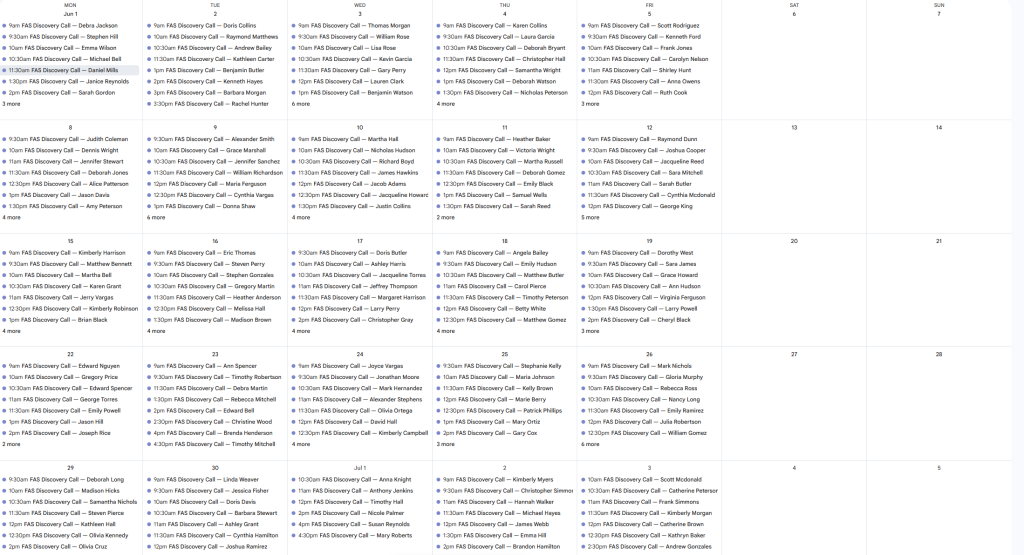
SAME ARCHITECTURE, DIFFERENT VERTICALS
Proof Beyond One Pipeline
CASE STUDY 1
Mzad Qatar: From Fragmented Acquisition to 3M Active Users
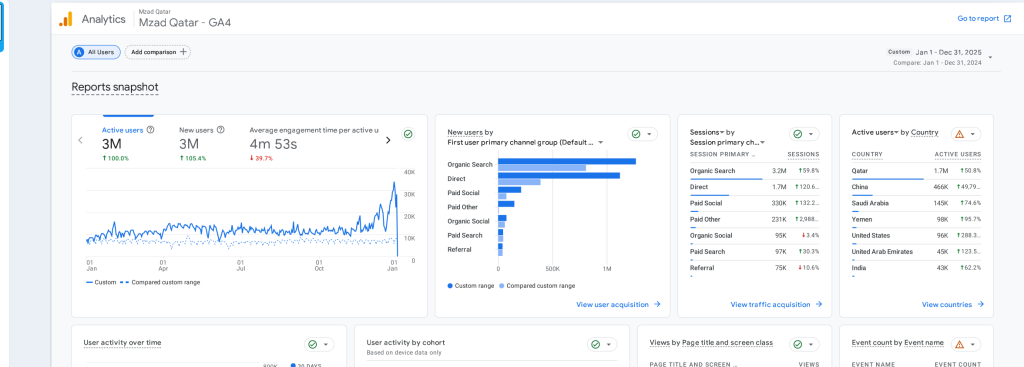
Results
- Active users doubled to 3M (+100% YoY)
- Organic search grew +59.8%
- App engagement exploded to 436M screen views with a 40.5% Week-1 retention rate
- Average session duration: 2 hours 37 minutes
The Problem
- Web and app acquisition strategies were fragmented and bleeding budget
- They were overly dependent on Direct/Brand traffic, missing high-intent search
- App retention wasn’t tracked at a cohort level
- Listing quality was inconsistent across 30+ vertical categories
- Critical leaks in data tracking and channel mix were silently stalling scale
The Process
- Fixed the leaks in Marketing & Tech: diagnosed friction across two GA4 properties, instrumented deep cohort analysis (Week-1/2/3 retention), and built re-engagement loops to convert browsers into active bidders.
- Built the High-Intent Acquisition Machine: launched cross-network and Google Search campaigns targeting high-intent queries (e.g., “cars for sale Qatar”), restructured campaigns around high-value categories (Car Plates, Real Estate), and overhauled organic category pages to rank for massive search terms.
- Deployed the Retention Protocol: managed mobile UA separately from web with Android/iOS-specific creatives, and optimized the in-app experience for habit-forming behavior.
CASE STUDY 2
Syaanh: From Leaky Funnel to 56,000 Paid Orders
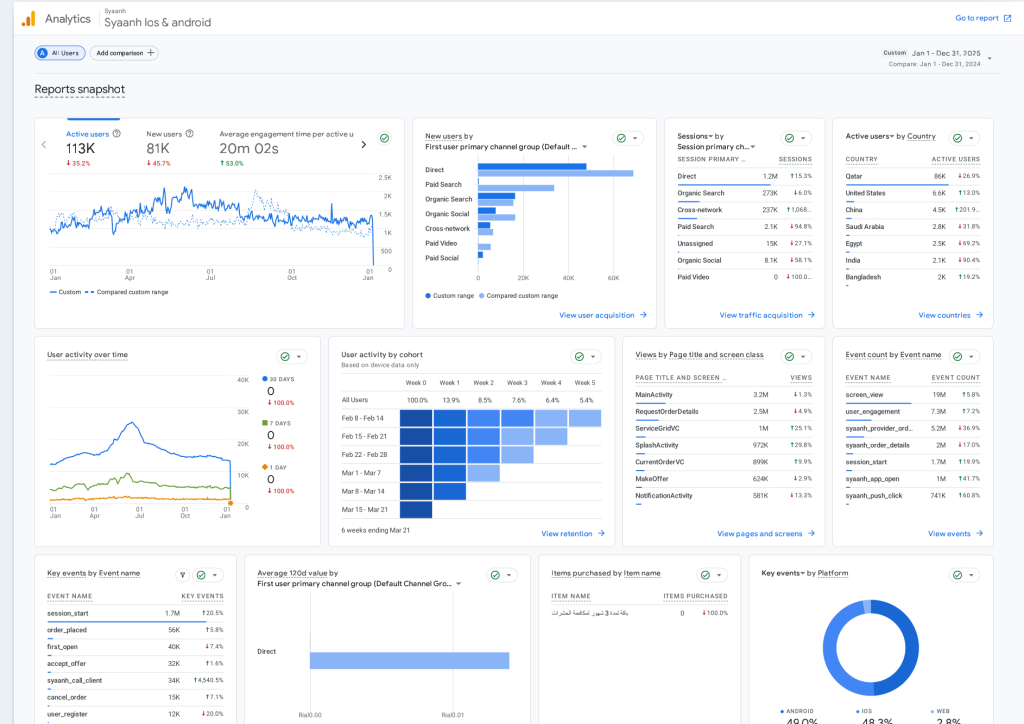
Results
- Active users grew to 113K (+35.2% YoY)
- Engagement time surged +53% to over 20 minutes per user
- 56,000 paid orders and 41,000 accepted provider offers
- Acceptance rate skyrocketed to 61%
- Platform rating: 4.35/5 across 41,000+ completed jobs
- Push notifications drove 741,000 click events (+60.8% YoY)
The Problem
- Major bottleneck at the bottom of the funnel: providers were submitting offers, but acceptance rates were initially low
- App open rates and retention needed significant improvement
- Seasonal demand spikes hit with no predictable way to capitalize
- Money went into acquiring users, but if a homeowner didn’t accept a provider’s quote, the entire acquisition cost was wasted
The Process
- Fixed the leaks in Marketing & Trust: diagnosed drop-off between “Service Request” and “Offer Accepted,” and launched targeted B2B acquisition campaigns to onboard higher-quality, verified service companies (not just individual handymen), immediately raising platform trust. Result: acceptance rate skyrocketed to 61%.
- Built the High-Intent Acquisition Machine: replaced generic “download our app” ads with category-led search campaigns targeting immediate pain points (“AC repair Qatar,” “plumber Doha”), timed ad spend around seasonal spikes (AC maintenance in summer, pre-Ramadan home prep), and leveraged cross-network (237K sessions) and organic search (273K sessions).
- Deployed the Retention Protocol: built re-engagement loops for dormant users, optimized push notification strategy (741K clicks), and deployed targeted email flows for users who had placed an order but hadn’t returned for a second service.
CASE STUDY 3
Mzady Algeria: From Zero to 264,000 Users in a Cold-Start Market
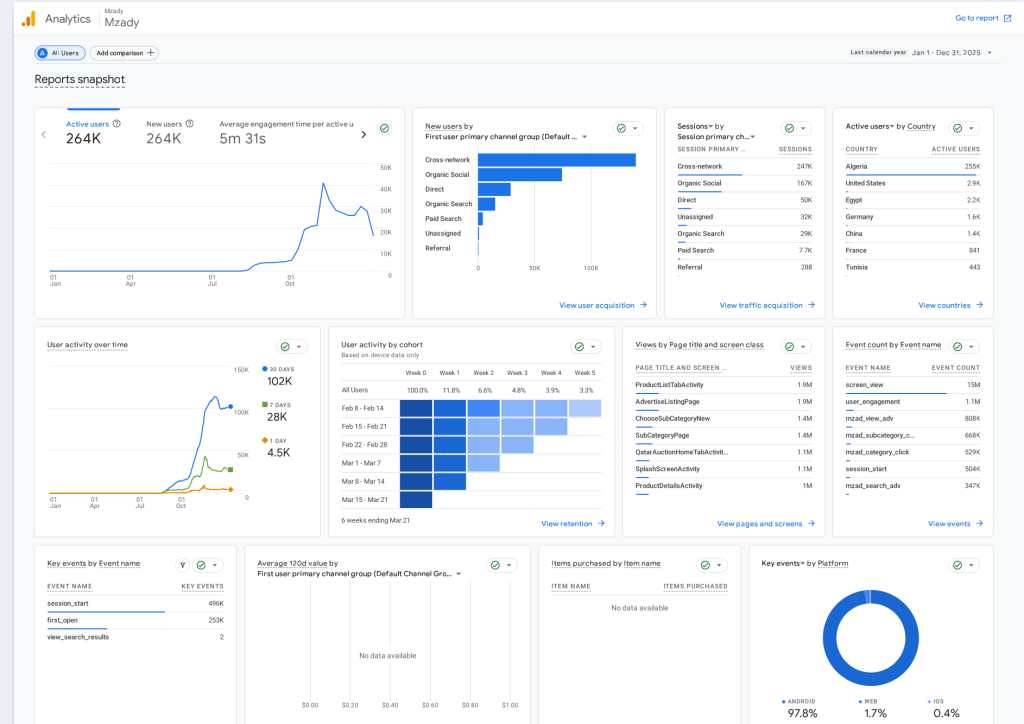
Results
- Acquired 264,000 active users from absolute zero
- Product engagement exploded to 15M screen views and 808K in-app ad views
- Average session time: 5 minutes 31 seconds, the highest in the company’s portfolio
- 167,000 sessions driven completely organically
- 247,000 highly qualified sessions from cross-network paid campaigns
The Problem
- Zero brand recognition
- No historical data to model from
- Market heavily dominated by Android (97.8%), rendering iOS-heavy strategies useless
- Competitors already entrenched in classifieds
The Process
- Fixed the infrastructure for a new ecosystem: acknowledged 97.8% Android dominance, bypassed iOS spending entirely, rebuilt ASO exclusively for Google Play Store, and mapped paid campaigns to highly specific seasonal trends (AC in summer, Car Rentals in Q2).
- Built the Social-First Acquisition Machine: because Google Search behavior was lower in this market, pivoted heavily to Meta and Social channels, deployed an Arabic-language organic social strategy that resonated with local deal-seekers (167K organic sessions), and layered aggressive cross-network paid campaigns (247K qualified sessions).
- Deployed the Deep-Engagement Protocol: built aggressive push notification and in-app messaging campaigns targeting users who downloaded but hadn’t placed their first auction bid.
We only onboard 1 new client per month.
This isn’t a marketing tactic. It’s the actual limit of how many systems we can build and launch properly. When the spots are gone, the next opening is the following month.
Phase 1 builds launch on the 1st and 15th of each month. Sign up today, and you can be in the next cohort.
Book Your Diagnosis Call
- Identify which phase is your biggest leak
- Show you exactly what the system would look like for your business
- Give you a single recommendation with a single price